
Supply-line leaks
Often shows as steady moisture and can worsen quickly because lines are under pressure. Common clues include dampness that does not fully dry out and water sounds when no fixtures are running.
Serving Philadelphia, Pennsylvania & surrounding areas
Find the source fast, keep damage from spreading, and get a clear, written plan for what to fix next.
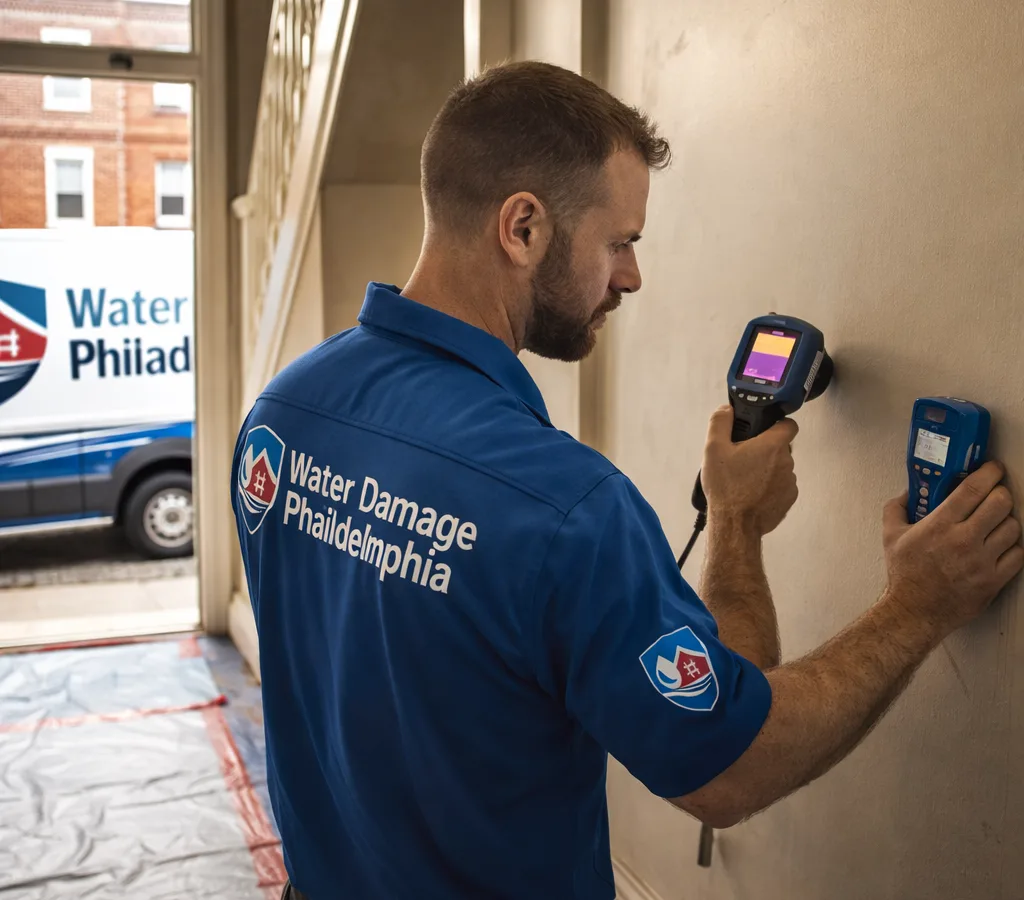
If you are searching for leak detection Philadelphia help, the usual problem is the same: water is showing up, but the source is not obvious. You might see a ceiling stain, bubbling paint, damp baseboards, musty odor, or a sudden spike in usage.
Our approach is to locate the leak with the least amount of disruption possible, document what we found, and explain what has to happen next to stop the water and prevent ongoing damage. Water can travel along framing, run behind tile, wick through plaster, and show up far from the actual failure point.
Philadelphia homes add their own challenges. Many properties have older plumbing, tight chases, finished basements, and attached walls that limit access. In rowhomes and twins, moisture can also migrate through party-wall assemblies and shared areas, which is why a careful room-by-room assessment matters.
Water Damage Philadelpha provides leak detection across Philadelphia, PA, including 19123, with a practical goal: pinpoint the source, confirm the pathway, and give you a plan you can hand to a plumber or restoration team without tearing open half the house.
Leak detection is a process of narrowing down variables. We start with what you are observing—when it appears, where it appears, and whether it changes when fixtures run—then verify moisture patterns with instruments.
You get straightforward documentation: where moisture was confirmed, what the most likely source is, what still needs verification, and what steps should happen next.
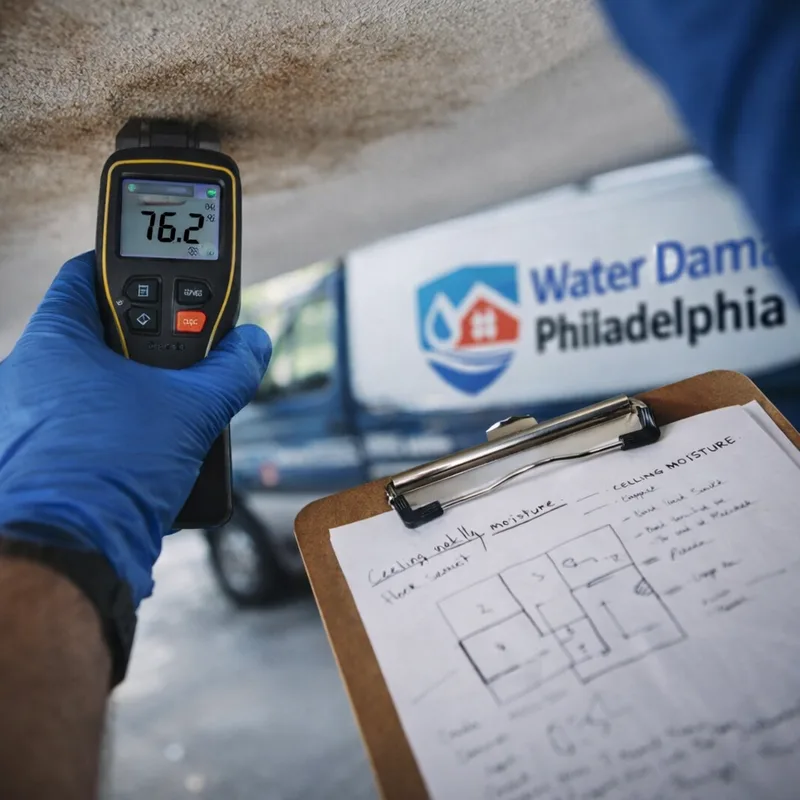
Often shows as steady moisture and can worsen quickly because lines are under pressure. Common clues include dampness that does not fully dry out and water sounds when no fixtures are running.
Usually appears after using sinks, tubs, showers, laundry, or dishwashers. Staining may be intermittent, with odor or localized ceiling damage under bathrooms and kitchens.
Grout and tile can hide problems until water reaches drywall or framing. Watch for soft walls, loose tiles, or dampness near the shower base and adjacent rooms.
These can start small but soak subflooring over time. Common signs include rocking toilets, persistent musty smell, or staining on the ceiling below a bathroom.
Basements in Philadelphia can show moisture for multiple reasons. We look for patterns that indicate a plumbing source versus moisture entering through foundation areas.
The stain is rarely the source. We trace back using moisture readings and building layout so repairs target the real failure point.
In Philadelphia, construction style matters. Rowhomes and twins often have stacked plumbing runs and limited access behind finished walls. Older plaster can hold moisture differently than modern drywall, and finished basements can conceal active wet materials under flooring, paneling, or built-ins.
Neighborhood building patterns affect where the investigation starts:
When water is spreading, your next decisions affect cost and downtime. Our goal is to give you enough clarity to stop the leak quickly and avoid rework.
We work from the visible symptoms toward focused testing, targeted access, and a practical repair plan.
Request Emergency ServiceWe confirm the symptoms, review any recent plumbing work, and check for active water conditions that need immediate control.
We take readings across the affected rooms to outline the wet footprint and identify the most likely direction water is traveling.
Depending on the situation, we use thermal guidance, acoustic listening, and fixture-by-fixture checks to narrow the source.
If opening is needed, we recommend the smallest, most reasonable access point based on the data, not a hunch.
You receive a practical summary of what was found, what should be repaired first, and what cleanup actions may be needed to protect materials.
If you see new staining, smell mustiness, or notice damp floors or walls, get the source located early so repairs stay targeted and the damage does not spread.
Call for Emergency Help“We had a ceiling stain that kept coming back. They mapped the moisture, narrowed it down to a small section, and the plumber confirmed the exact spot. It saved us from opening up multiple rooms.”
“Our basement wall looked wet and we could not tell if it was plumbing or something else. The inspection and explanation were direct, and we finally had a plan instead of guessing.”
Leak detection cost depends on access, how many areas are affected, and whether the leak is active and easy to reproduce. A straightforward visit to narrow a single wet area is typically less than a complex multi-room or multi-unit investigation, and older Philadelphia homes with tight chases can take longer. The most accurate way to price it is to confirm the symptoms, the property type, and what testing is likely needed.
Often, yes, we can narrow the source significantly using moisture mapping and non-invasive tools, then recommend a small, targeted access point if one is needed for confirmation or repair. Some leaks still require limited opening to verify the exact fitting or joint that failed, but the goal is to avoid broad demolition.
If water is actively running or spreading, shut off the nearest safe water source you can control and avoid using fixtures that may be involved until the source is identified. Take photos of visible damage and note when it appears, such as after showers, overnight, or during laundry. Those details help shorten the investigation and reduce disruption.
Response time depends on the current schedule and urgency of the situation, but active leaks and fresh water damage are prioritized when possible. If you can share whether water is currently flowing, the affected rooms, and whether the property is occupied, we can recommend the fastest practical next step.
We focus this visit on locating and documenting the leak source and moisture footprint, then advising what needs to happen next. If water damage cleanup is required, you can coordinate it through Water Damage Philadelpha and review an overview of water damage in Philadelphia to understand typical next steps.
Yes, we can summarize where moisture was confirmed, the most likely source, and what targeted access is recommended so the repair is focused. In multi-unit situations common in Philadelphia, clear documentation helps avoid duplicated work and speeds up decisions.
Describe what you are seeing and where it is showing up. We will help you pinpoint the source and lay out the next steps for repair and cleanup.