Water damage restoration · Philadelphia

Water Damage Restoration In Philadelphia

When water gets in, time matters. We respond quickly, document what we find, and dry and restore your property with clear steps and steady communication.

Moisture mapping Documented drying Restoration coordination
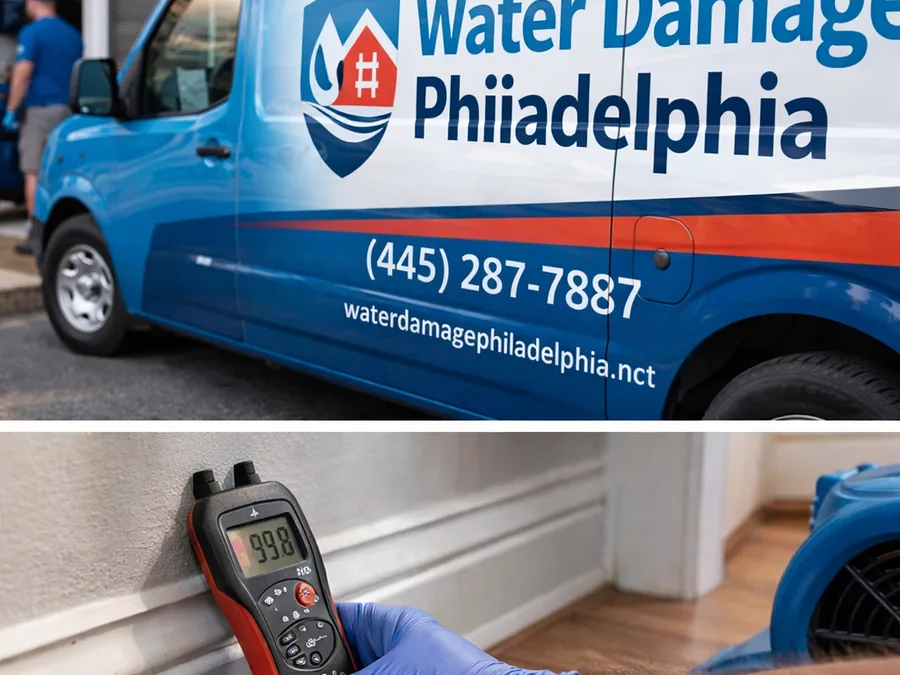
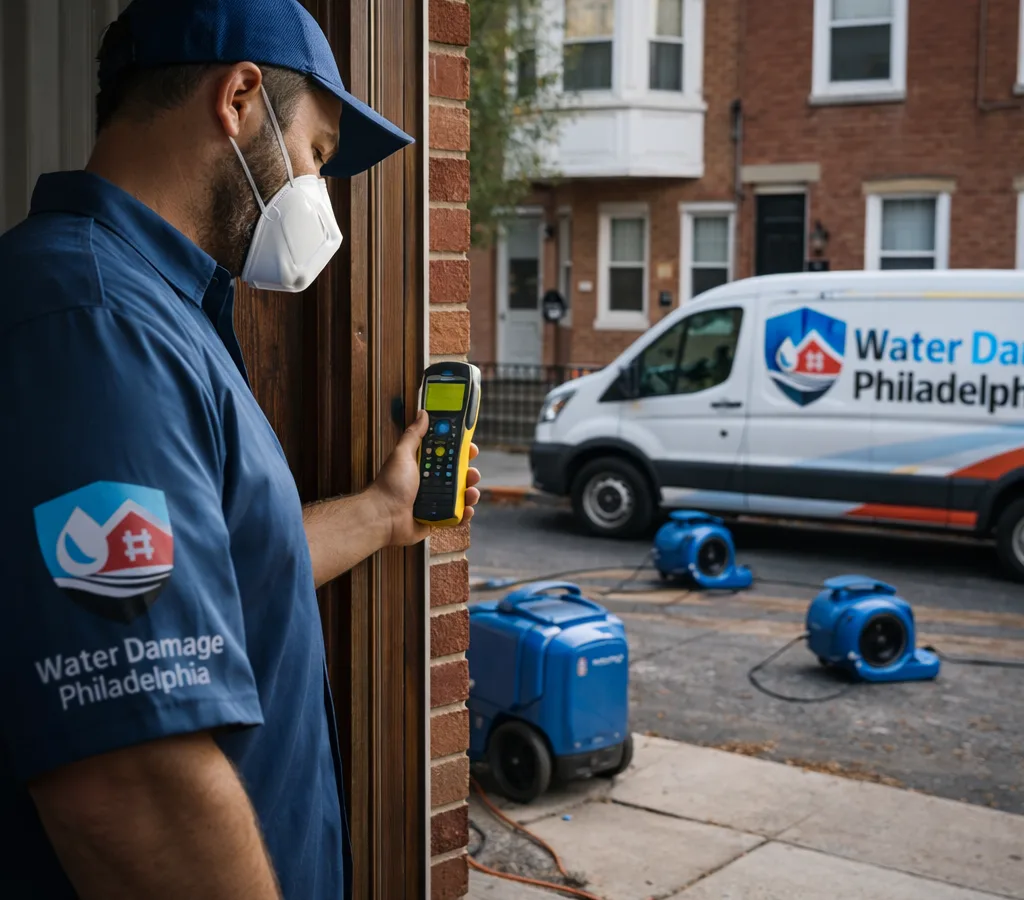
Technician in protective equipment using a moisture meter at a Philadelphia rowhome entryway while air movers operate in the background

Fast, careful water damage restoration for Philly homes and businesses

If you are dealing with a leak, overflow, or stormwater intrusion, water damage restoration in Philadelphia needs to start with an accurate inspection and a drying plan, not guesswork. Water can move through flooring, baseboards, wall cavities, and insulation fast. The goal is to stop additional damage, dry the structure to the right targets, and restore the space so you can use it again.

Water Damage Philadelpha handles water damage restoration Philadelphia property owners rely on when they want a straightforward process: assess the affected materials, control humidity, remove what cannot be saved, and document the work as we go. If you are coordinating with insurance, the photos, readings, and written scope matter.

Local realities also change how we approach the job. Philadelphia has attached rowhomes and older buildings where shared walls, layered flooring, and tight mechanical chases can hide moisture. In Fishtown and Northern Liberties, rehabs often mix new finishes with older framing. In South Philadelphia, rowhome basements and first floors can be vulnerable after heavy rain. Center City condos and mixed-use buildings require careful containment and coordination, while older plaster and wood trim in West Philadelphia may be worth saving when drying is monitored correctly.

For an overview of help across different property situations, review our approach to water damage in Philadelphia.
Request Emergency Service
A complete restoration scope

What water damage restoration typically includes

On-site assessment and moisture mapping

We identify the source category where applicable, check affected rooms, and map moisture with meters and thermal imaging where it helps. The result is a written plan explaining what can be dried in place, what needs removal, and what must be monitored.

Water extraction and stabilization

Standing water is removed first, then temperature and humidity are controlled. Faster extraction reduces how far water wicks into drywall, trim, and subfloor.

Structural drying and dehumidification

We set air movers, dehumidifiers, and containment as needed, then track progress. Drying is complete when readings return to safe targets—not simply when surfaces look dry.

Selective demolition and debris removal

When materials cannot be saved, we remove only what is necessary to expose wet cavities and prevent continued deterioration.

Cleaning, antimicrobial steps, and odor control

When the water source calls for it, we clean affected surfaces, use HEPA filtration, and address odor at its source based on what the water contacted and how long it remained.

Repair and restoration coordination

Once drying is verified, we outline the rebuild scope for drywall, flooring, trim, paint, and related repairs. This creates one coordinated plan instead of leaving you to juggle multiple trades.

Request Emergency Service
Measured drying, selective removal

Why speed matters, and why rushing is a mistake

A fast response reduces secondary damage, but the work still has to follow the right order.

First: stop the source and remove standing water. Even a small supply-line leak can keep feeding moisture into flooring and wall plates.

Next: dry with measurement. Moisture meters and, when useful, thermal imaging locate wet areas that are not visible. Equipment then moves air across wet surfaces and removes water vapor from the air.

Then: remove only what cannot be dried safely. In Philadelphia rowhomes, water commonly travels along shared framing or beneath layered flooring. Cutting too little can trap moisture; cutting too much increases cost and rebuild time.

Finally: verify the dry standard and document the work. If an insurer is involved, this supports what happened, what was affected, and why materials were removed or saved.

If you are unsure whether you need full restoration or only drying and repair, start with an inspection and written scope before major tear-out begins.

Request Emergency Service
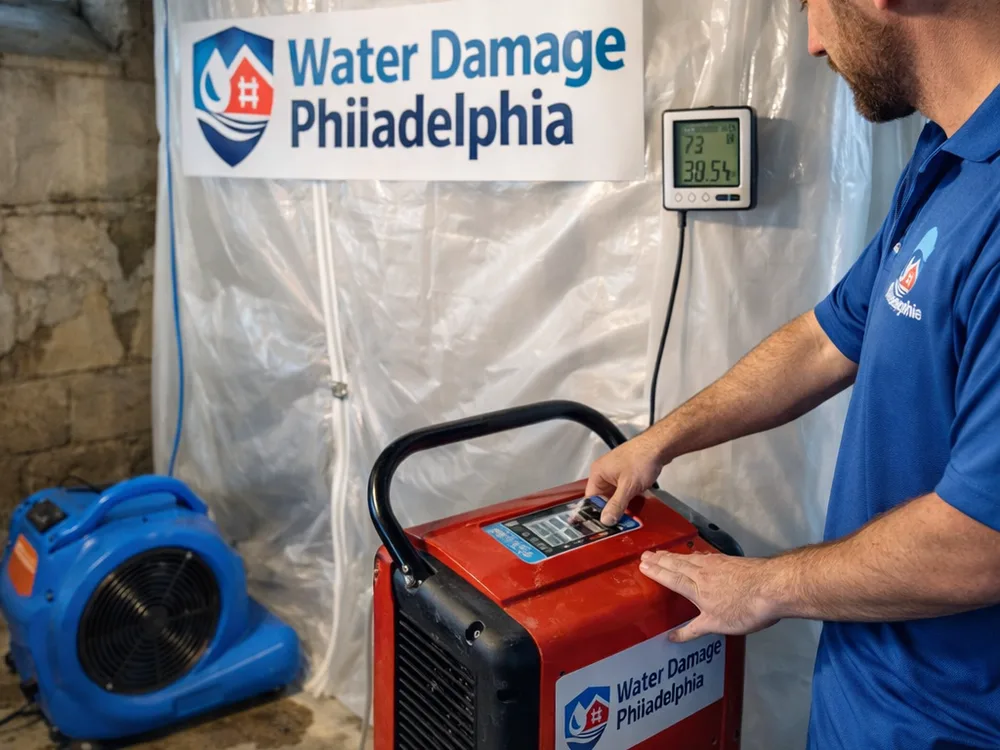
Dehumidifier and air mover operating inside plastic containment in a Philadelphia basement with a hygrometer monitoring drying conditions
From inspection to restoration

Our process for water damage restoration in Philadelphia

A measured sequence helps control immediate risks, expose hidden moisture, verify drying, and plan the necessary repairs.

Request Emergency Service
01

Safety check and immediate mitigation

We look for electrical hazards, contaminated water conditions, and materials that need quick action. We can recommend shutting off water or power to affected areas when appropriate.

02

Inspection, readings, and a clear scope

We document affected rooms, take moisture readings, and explain what may be happening behind surfaces. You receive a practical plan for drying, cleaning, and restoration.

03

Extraction and controlled drying setup

Standing water is removed, and equipment is set based on the loss size and materials involved, including hardwood, tile, carpet, plaster, drywall, and masonry.

04

Monitoring and adjustments

We monitor drying with readings and adjust equipment placement, containment, and dehumidification as conditions change.

05

Final verification and restoration plan

When materials meet drying targets, we provide documentation and outline repair steps. If rebuilding is needed, we coordinate the sequence to return the space to service.

Visible work, documented progress

What you should see on a well-run water loss

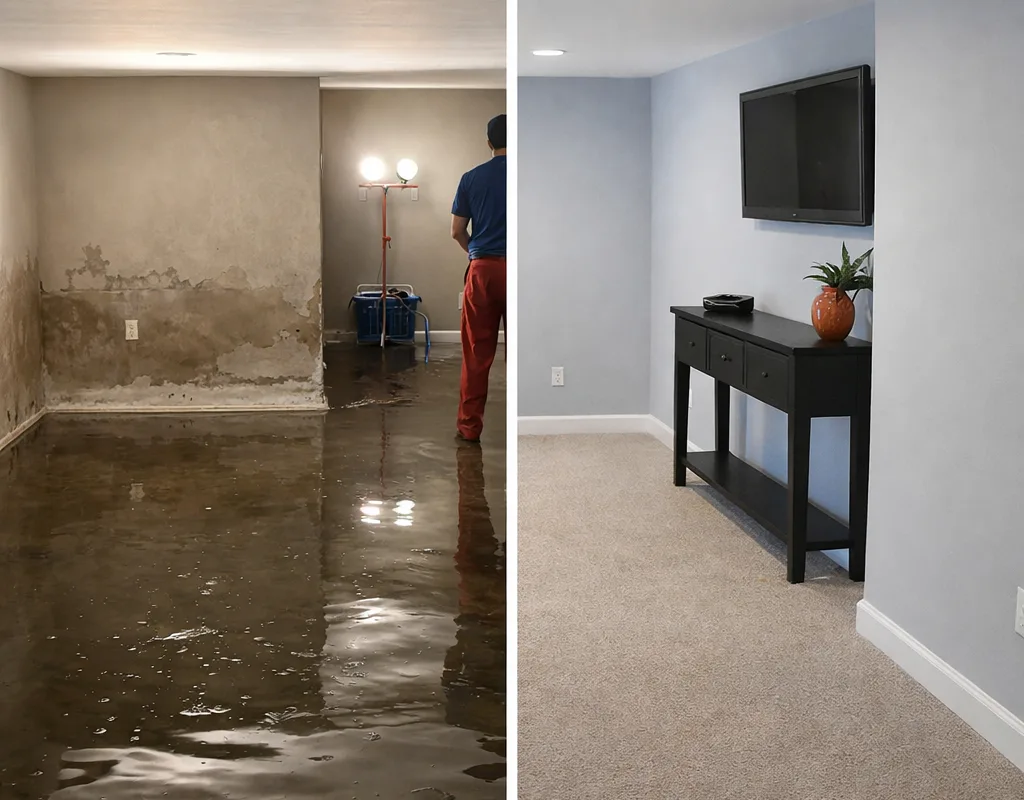
Side-by-side view of a flooded finished basement before work and the restored room after drying, new baseboards, and repainting
Drying, cleanup, and restoration should be visible in both the finish work and the documentation.
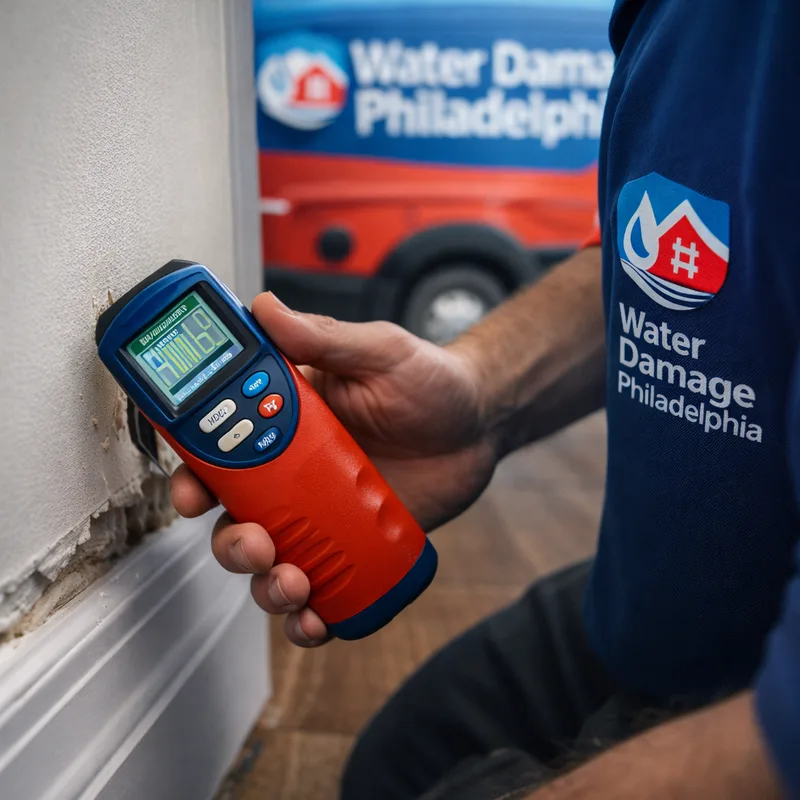
Technician holding a penetrating moisture meter against a baseboard and drywall cut line
Decisions should be based on readings, not appearance.
Crew member protecting flooring and setting air movers in a narrow Philadelphia rowhome hallway
Older rowhomes often require tight, tidy setups to protect finishes and keep walkways usable.
Request Emergency Service

“We had water come through the kitchen ceiling from the unit above. They showed up quickly, explained what was wet and what was not, and kept checking moisture until it was actually dry. The documentation made the insurance side much easier.”

Maya R.

“After a basement backup, they set containment, cleaned the affected area, and walked me through what had to be removed versus what could be saved. The crew was respectful of the house and the neighbors.”

Jamal T.

“I appreciated the straight answers. They gave a written scope, took photos, and the drying equipment was placed where it needed to be, not just wherever there was space.”

Erin S.

If you have active water or materials that feel damp, reach out as soon as you can. A quick inspection and drying plan can prevent hidden moisture from turning into a much larger repair.

Call for Emergency Help
Property-owner answers

Water damage restoration Philadelphia: common questions

How fast can you start water damage restoration in Philadelphia?+

Start times depend on current demand and the severity of the loss, but the goal is rapid response for active water situations and time-sensitive drying. We will ask what happened, whether water is still running, which areas are affected, and whether power is safe, then explain the next available window and what to do while you wait.

What is the difference between water mitigation and full restoration?+

Mitigation is the stop-and-dry phase: extraction, drying, cleaning, and removing unsalvageable materials. Restoration is the rebuild phase: replacing drywall, flooring, trim, and finishes. Many projects need both, but mitigation with moisture verification comes first.

How long does the drying process usually take?+

Drying commonly takes several days and can take longer when water reaches dense assemblies such as plaster, layered flooring, or insulated cavities. The timeline depends on readings, humidity control, and the affected materials, so equipment is monitored and adjusted rather than removed on a guessed date.

Will you remove drywall and flooring, or can they be dried in place?+

Some materials can be dried in place when readings, access, and the water category make that appropriate. Drywall with high wicking, delaminated flooring, and saturated insulation often require removal. We explain the reason for demolition and keep it as selective as possible.

Do you work with insurance claims for water damage restoration Philadelphia property owners file?+

Yes. We can support insurance coordination by documenting affected areas, equipment, readings, and completed work. Coverage depends on your policy and the cause of loss, so our focus is a clear written scope an adjuster can review.

What affects the cost of water damage restoration in Philadelphia?+

Cost depends on the water category, the extent of spread, affected materials, equipment and monitoring requirements, and the amount of rebuilding needed. Clean water caught early may require mostly drying and minor repairs, while contaminated water or prolonged saturation usually increases cleaning, containment, and removal.

What should I do right away while waiting for a restoration team?+

Stop the source if you can do so safely, avoid wet electrical areas, and move small items off wet floors. If safe, gently blot or extract water and increase airflow. Do not run fans on suspected contaminated water or begin demolition without a plan, because doing so can spread contamination or enlarge the rebuild.

Need water damage restoration now?

Tell us what happened and what areas are affected. We will respond with a practical plan, clear documentation, and the next steps to dry and restore your Philadelphia property.